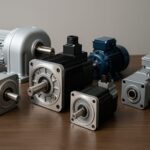
Here, we use it in factory automation (FA) equipment.Motors, etc. mouth turned down at the cornersPower supplied by factory." Here is a note about the
When I started my career as a mechanical designer, I once experienced a painful failure due to my limited knowledge of factory power specifications. What I particularly remember is a case in which I made a mistake in selecting a motor because I did not fully consider the characteristics of single-phase and three-phase in selecting a power source. Although I was able to save the day when I realized this during the inspection drawing, a power source selection error is not merely a matter of insufficient performance or failure, but can lead directly to delays and cost increases for the entire project, as well as safety issues.
The purpose of this article is to provide systematic knowledge so that other designers will not experience the same mistakes and regrets as I have in the past.
First,Basic types of power supplies used in factories and their respective characteristicsThe lecture will carefully explain the fundamentals of the system, from high-voltage power receiving to 24VDC. Next, based on this knowledge, we will explain the basics ofConcept of optimal power supply specifications by machine categoryWe will delve into the specifics of the
Furthermore, it is inevitable in today's globalized world,Power supply standards in major countries that are essential for overseas expansionwill also be discussed in detail. And finally, the key to stable operation.Quality assurance and protection design to prevent power supply problemsThe structure of this article is designed to provide a comprehensive study of the following topics. By reading this article to the end, you should be able to confidently design a machine to meet your factory's power supply specifications.
- Overall picture of factory power supplies from the basics
- Specific specifications for factory power supply considered in mechanical design
- Knowledge of factory power supply essential for overseas expansion
Overall picture of factory power supplies from the basics
What is the difference between high-voltage and low-voltage power receiving?
There are two main methods by which factories receive electricity from power companies: high-voltage and low-voltage.and this is primarily determined by the size of the power contract. It is helpful for the mechanical designer to understand this difference in order to understand the power environment of the installation.
In conclusion, large factories and facilities with contracted power of 50 kW or more generally receive high-voltage power, while relatively small-scale establishments with contracted power of less than 50 kW generally receive low-voltage power.
In the case of high-voltage power receiving, electricity with a high voltage of 6,600 V is drawn directly into the facility, and is converted to usable voltage such as 100 V or 200 V at a private substation facility called a "cubicle" installed on the premises. Although the installation of cubicles requires an initial investment and regular maintenance, they have the great advantage that the unit price of electricity purchased from the power company is set at a lower price than that of low-voltage electricity.
On the other hand, in low-voltage power receiving, electricity is supplied after being transformed by a transformer owned by the power company and installed on a utility pole. Since there is no need to have substation equipment at the facility, it is easy to install, but the unit price of electricity is more expensive than that of high-voltage power receiving.
| (data) item | low voltage power reception | receiving electricity under high voltage |
| contracted power | Less than 50kW | 50 kW or more but less than 2,000 kW |
| Supply voltage | 100V / 200V | 6,600V, etc. |
| transformer substation | Not required (managed by the power company) | Necessary (installed and managed by consumer) |
| electricity price per kilowatt-hour | Relatively high | comparatively cheap |
| Main applications | General households, small stores, town factories | Medium to large factories, buildings, commercial facilities |
From a machine design perspective, factories that receive high-voltage power often have a power management system in place and can expect relatively stable power quality. Conversely, in low-voltage power receiving environments, design considerations may be required, such as selecting a power supply unit that can handle a wider input voltage range, taking into account the possibility of voltage fluctuations depending on the surrounding power usage.
Three-phase power supply as the basic power source
Three-phase power supply" is the basic power source used to run motors and other machines that require large amounts of power in factories.The first step in power design is to understand the difference between a single-phase power supply and a single-phase power supply. This has different characteristics from the "single-phase power supply" commonly used in homes, and understanding the difference is the first step in power design.
Three-phase power supplies are also called "power" because they can send large amounts of power very efficiently compared to single-phase power supplies. For the same amount of power sent, less current is required than single-phase, which reduces power losses in the power lines, resulting in lower electricity costs.
In particular, a three-phase power supply is overwhelmingly advantageous in driving industrial motors. When three-phase electricity is applied to a motor, it can produce a smooth rotating force (rotating magnetic field) without any special devices. This makes it possible to simplify the motor structure and achieve high efficiency. In contrast, a single-phase motor requires an auxiliary circuit to help it start, and its capacity is limited to about 3 hp (approx. 2.2 kW).
In factories, three-phase 200V is used to power large machinery, commercial air conditioners, conveyors, and other equipment. On the other hand, single-phase 100V/200V is used for equipment with relatively small power requirements, such as lighting, power supplies for control equipment, and outlets for personal computers and measuring instruments. Therefore, if the machine to be designed requires a large motor, a three-phase power source must be employed.
Main low-voltage power distribution systems in Japan
There are several types of low-voltage power sources (power distribution systems) commonly used in factories and offices in Japan. The characteristics of each are listed below.
| Power distribution system | Voltage supplied | Main applications | feature |
| Single-phase 2-wire | 100V | Older homes, small equipment lighting and outlets | The simplest method, supplied by two wires. |
| Single-phase 3-wire | 100V and 200V | Lighting, outlets, and small air conditioners for homes, stores, and factories | It uses three wires and can take out both 100V and 200V. |
| Three-phase three-wire | 200V | Factory motors (power), commercial air conditioners, large equipment | It is supplied by three wires and used as a large power source. |
| (Reference) Three-phase 4-wire | 240V and 415V | Large factories, buildings, etc. | Although not common in Japan, they are sometimes employed in facilities that require more power. |
Comparison of Switching and Linear Power Supplies
Power supply equipment is essential to convert the alternating current (AC) power received at the factory into direct current (DC) power used by electronic devices such as PLCs and sensors.The two main types of power supplies are Currently, the two mainstream methods are "switching power supplies" and the long-established "linear power supplies.
The key to designing a machine is to use the two in an appropriate manner according to the machine's required specifications. To sum up, switching power supplies are chosen when efficiency and miniaturization are priorities, and linear power supplies are chosen when low noise is the highest priority.
Switching power supplies convert power by turning internal switching elements on and off at high speed. The greatest advantage of this method is its extremely high power conversion efficiency of 80-95% or higher and low heat generation. The low heat generation also means that the cooling mechanism can be made smaller, and components such as transformers can be downsized, making the entire power supply unit very small and light.
However, it has the disadvantage of being prone to electrical noise (EMI) caused by high-speed switching operations. To prevent this noise from affecting other precision equipment, measures such as installing noise filters and proper grounding are essential.
Linear power supplies, on the other hand, are a simple method of stabilizing output voltage by consuming excess voltage as heat. Since there is no switching operation, in principle, the generation of noise is extremely low, and the greatest feature is that an extremely clean and stable output can be obtained.
However, since excess power is discarded as heat, the conversion efficiency is as low as 30 to 60%, and the large amount of heat generated is a major drawback. This requires a large heat sink, making the entire device large and heavy.
| special characteristic | switching regulator | Linear power supply |
| Power conversion efficiency | High (80-95%+) | Low (30-60%) |
| Size & Weight | small and light | large and heavy |
| Output noise | big | Very small |
| calorific value | small | big |
| Main applications | Almost all electronic equipment such as PCs, FA equipment, etc. | Noise-sensitive equipment such as measuring instruments and audio equipment |
In modern industrial machinery, a hybrid design may be adopted, in which a high-efficiency switching power supply is used as the main power supply for the entire machine, and linear power supplies or low-noise transducers are locally placed only in areas such as sensors, which are particularly sensitive to noise.
Standard voltage of control circuit 24VDC
In factory automation (FA), "24VDC" is the de facto global standard power supply voltage for control equipment such as programmable logic controllers (PLCs), sensors, and indicator lights. The first two are the following.
The reason why 24VDC is widely adopted is because of its excellent balance. First, it is within the range of "safety extra-low voltage (SELV)," which poses a low risk of electric shock to the human body, making it easy to ensure the safety of workers. At the same time, it combines the practicality of being less susceptible to voltage drops even when wired over a certain distance and being relatively resistant to electrical noise.
A common configuration in factories is to convert AC power of 100 VAC or 200 VAC obtained from a wall outlet into a stable DC power of 24 VDC by means of a switching power supply installed in the control panel, and supply it to each control device.
Noise suppression is a very important design consideration. The ironclad rule is that AC power lines, which carry large currents to drive motors and other equipment, and weak DC control and signal lines connected to PLCs and sensors should be physically separated and housed in separate wiring ducts to prevent noise interference caused by electromagnetic induction from each other. Observing this basic rule will lead to stable operation of the entire machine.
Specific specifications for factory power supply considered in mechanical design
Power supply for the control panel, the brain of the machine
The control panel is the brain of a machine, containing the PLC and various controllers that control the operation of industrial machinery. The power supply system inside the control panel is the foundation that supports the stable operation of the entire machine, and its design is extremely important.
The control panel power supply is divided into two main systems.One is the "main circuit" to generate large power such as motors and heaters, and the other is the "control circuit" to run electronic devices such as PLCs and sensors.
The main circuit uses a high-power AC power source, such as three-phase 200 VAC in Japan.On the other hand, as mentioned above, 24VDC converted from AC power by a switching power supply is standard for control circuits. Clear separation of these two systems in the design is the basis for preventing problems.
Major power supply-related components of control panels
- Switching power supply: Generates 24VDC for control circuits. Select a product with a capacity that has a margin of about 20 to 50%, based on the total current consumption of all devices to be connected.
- Wiring circuit breaker: Installed at the entrance to the power supply, this circuit breaker protects the entire panel by interrupting the circuit in the event of an overcurrent or short circuit (short circuit).
- Transformer (transformer): Used to step down the voltage to 200 VAC when the main circuit is a 400 VAC system or to provide a 100 VAC outlet (service outlet) for connecting a PC for maintenance inside the panel.
- Circuit protector: The 24VDC circuit is divided into smaller branches for each function, such as for sensors and outputs, to protect each. This prevents a single sensor failure from causing the entire system to shut down.
Proper selection of these components and their placement in a layout that takes noise suppression into consideration is the key to creating a highly reliable control panel.
Power source for inverters and servo motors
Inverters and servo motors are essential components that allow machines to perform precise movements and variable speed operations. In order to maximize the performance of these components, a proper understanding of power supply specifications and selection of appropriate capacities are required.
Inverters are devices that freely change the rotational speed of general-purpose motors, while servomotors are motor systems that control position, speed, and torque with even greater precisionThe two types of power supplies are Both of these devices accept a 3-phase AC power source (200V-class in Japan and 400V-class overseas) from the factory as input, convert it internally to power suitable for motor drive, and output it.
Selection of power supply capacity cannot be determined simply by motor output (kW) alone. To run a motor, a large torque (power) is required not only during rated operation, but especially during acceleration at the beginning of movement, and several times the rated current flows instantaneously.Power supply capacity with enough margin to supply this peak currentIf not, the motor will not perform as it should, and in the worst case, it will stop with an error.
When calculating the capacity of a power supply facility, in addition to motor output, the efficiency of each motor and drive unit (inverter or servo drive), and the power factor must be considered. A simple formula is as follows
Power supply equipment capacity [kVA] = motor output ÷ (motor efficiency × inverter efficiency × power factor)
Also, when the motor decelerates, it acts as a generator and returns power to the power supply side, a phenomenon called "regeneration. It should be remembered that a separate component called a "braking resistor" may be required to handle this energy.
Power supply specifications for industrial robots and drive equipment
In modern factories, not only conventional motors but also a wide variety of driving devices are in use, of which industrial robots are a typical example. Each of these devices requires different power supply specifications, and the designer must understand their characteristics.
Power source for industrial robots
Power specifications for robots vary widely depending on their type and size.
- Cooperative robots: Designed to work in the same space as humans, cooperative robots are easy to install. For this reason, many of them operate on a power supply of 100 to 240 VAC, which does not require any special power installation. Many of them consume only a few hundred watts, the same level as ordinary home appliances, and can be easily powered from existing power outlets, which is a major feature.
- Large industrial robots: Large vertically articulated robots that perform high-speed, high-load work, such as those found on automobile assembly lines, require a three-phase 200 VAC (in Japan) power supply to support their power. Power consumption reaches several kVA or more, requiring a dedicated power supply system and a solid equipment base.
- Autonomous Mobile Transport Robot (AMR/AGV): AMRs and AGVs, which move autonomously around the factory to transport parts and other materials, are powered by on-board batteries since they cannot be powered by cables. They are typically equipped with a 24VDC or 48VDC lithium-ion battery system that automatically returns to a charging station for contact or non-contact recharging when the battery power is low.
Compatible list of power supplies and driven equipment in Japan
The following table summarizes the relationship between the types of power supplies available in Japanese factories and the corresponding main drive equipment. Please use it as a reference when selecting the optimum combination according to the performance requirements of the machine to be designed and the installation environment.
| Type of power supply | Main driving equipment | Supplementation and Features |
| Single phase AC100V / 200V | Compact induction motors Compact AC servo motors Stepping motor (AC input driver) Cooperative Robot |
Used for relatively low-power equipment or when ease of installation is required. Induction motors require a capacitor for starting. |
| Three-phase AC200V | Standard induction motor AC servo motors for industrial use Large industrial robots Inverter drive equipment in general |
The most standard power supply for "powering" factories. Most industrial drive equipment is based on this power supply, as it is capable of high-power and high-efficiency driving. |
| DC 24V DC / 48V DC | DC motor (brushed/brushless) Stepping motor (DC input driver) Autonomous automatic guided vehicle (AMR/AGV) |
It is supplied from a switching power supply in the control panel or powered by a battery. Used for precise control or when driving moving objects. |
The Role of UPS in Protecting Systems from Momentary Power Losses
In factories, "instantaneous voltage drops (instantaneous low)" or "instantaneous power outages (instantaneous blackouts)," in which voltage drops or electricity stops for a very short period of time, may occur due to lightning strikes or accidents in the power system. Even a momentary event of less than 0.1 second can cause PLCs and industrial PCs to reset or shut down, leading to major damage such as production line stoppages or product defects.
UPS (Uninterruptible Power Supply) is a device that protects critical control systems from such power problems. The UPS has a battery inside.
The main purpose of installing a UPS in factory automation (FA) is not just to keep the machine running. It is to allow time for PLCs and PCs to complete the normal shutdown process in the event of a power failure, to protect critical data and programs, and to evacuate the machine to a safe state.
Key Points for FA UPS Selection
- Power supply method: The "constant inverter power supply method (online method)" is recommended as it is the most reliable and can always provide a stable power supply.
- Capacity: Select a capacity that exceeds the total power consumption (W) of all equipment connected to the UPS. Sufficient margin is necessary especially when connecting equipment such as motors and transformers that require a large current at startup.
- Backup time: Select a model that can provide the required amount of time in the event of a power outage. Since batteries degrade over time, it is recommended to select a model with a backup time of about twice the required time.
A UPS can be considered an insurance policy against unexpected power problems and an important investment in production stability.
Countermeasures against noise, surge, and harmonics
In order to design reliable machines, it is necessary to pay attention to the "quality" of the power supply. This is because the factory environment is full of various electrical disturbances that can cause machine malfunctions and failures. Here we will discuss three typical problems and their countermeasures.
Noise suppression
High-frequency electrical noise generated by the operation of inverters and relays can interfere with PLC and sensor signals, causing them to malfunction. The three basic principles of countermeasures are to "suppress at the source," "block at the propagation path," and "strengthen the receiving side. Specifically, it is effective to use a combination of the following methods: inserting an EMI filter (noise filter) in the power line, ensuring grounding (earthing), and physically separating power lines and signal lines in the wiring.
Surge countermeasures
Abnormally high voltage that is momentarily generated by lightning, large motor on/off, etc. is called "surge. Surges have enough energy to destroy electronic components in an instant, and are fatal to precision equipment composed of semiconductors. SPDs (surge protective devices) protect equipment from these surges by instantly releasing the energy to ground when an abnormal voltage is detected, thereby protecting the equipment in the subsequent stages. SPDs are effective when installed in places where external surges are likely to enter, such as the power input section of a control panel.
Harmonics countermeasures
Inverters and switching power supplies distort waveforms when they take in current from commercial power sources. The frequency components in this distorted waveform that are integer multiples of the original frequency (50/60 Hz) are called "harmonics. If a large amount of harmonic current flows into the power system, it can have a negative impact on other facilities, so Japan has established certain regulations in accordance with the "Guidelines for Harmonic Suppression Measures.When designing machines with large-capacity inverters and other equipment, it is important to recognize that compliance with these guidelines may be necessary.
Knowledge of factory power supply essential for overseas expansion
Importance of multi-voltage support
When exporting designed machinery overseas, one of the most basic but important issues is how to respond to the power supply conditions in each country. Voltage, frequency, and outlet shape vary widely from country to country and region to region, and it is not possible to even run a machine without ignoring these differences.
For example, the standard three-phase power supply for industrial use in Japan is 200V, while 480V is common in North America and 400V in many European countries. Frequency is also divided into 50 Hz in eastern Japan and 60 Hz in western Japan, but 60 Hz is the norm in North America and 50 Hz in many European and Asian countries.
| Region/Country | Frequency (Hz) | Typical industrial three-phase voltage (V) |
| Japan | 50 / 60 | 200 |
| America | 60 | 208, 230, 480 |
| China | 50 | 380 |
| Germany | 50 | 400 |
| United Kingdom | 50 | 400 |
The concept of "multi-voltage" is important in order to accommodate such diverse power supply specifications with a single machine. There are two main approaches to deal with this specific issue.
One method is to install a "transformer" (transformer) on the input side of the control panel to convert the local voltage to a voltage that can be used by the machine (e.g., 200 VAC). With this method, all internal components after the transformer can be standardized to a single specification.
Another method is to unify major components such as inverters and switching power supplies with "wide-range input" products that can handle a wide range of input voltages, from 200 V to 480 V AC. This method eliminates the need for transformers, leading to downsizing of control panels and cost reductions. Which method is best suited is determined based on a comprehensive assessment of the machine configuration and costs.
Motor frequency (50Hz/60Hz) compatibility and performance change
電Differences in source frequency have a direct impact on the performance of induction motors in particular, and designers must have a deep understanding of their characteristics.
First, the question is, "Can a motor be used with either 50 Hz or 60 Hz?" This question depends on the motor specifications. If a motor is specified as "50Hz/60Hz common use," it can be used in either region. However, if a motor specified as "50Hz only" or "60Hz only" is used in a region with a different frequency, not only will the performance change, but there is also a risk of failure due to overheating, or in the worst case, fire.It is important to always check the motor nameplate (nameplate) and specifications to confirm the compatible frequency.It is.
Secondly, "Does the difference in frequency make a difference in the performance of the motor?" The answer to this question is a definite "yes.Motor rotation speed is almost proportional to power supply frequency, resulting in a significant change in performanceI will do so.
- Rotation speed: Motors rotate approximately 20% faster in 60Hz regions than in 50Hz regions (60Hz ÷ 50Hz = 1.2x).
- Torque (rotational force): In general, torque tends to decrease as rotational speed increases. Therefore, torque is lower at 60 Hz than at 50 Hz.
- Current value: Due to the lower torque at 60 Hz, the current value tends to be lower than at 50 Hz for the same workload.
This change in performance means a significant change in flow rate and airflow for equipment such as pumps and fans, which in turn affects the performance of the entire machine.
However,Using an inverter to drive the motor can solve this problem. Inverters can freely control the frequency at which they output regardless of the frequency of the input power supply (50 Hz or 60 Hz), allowing motors to run at the same rotational speed in either regionIt is . This allows for standardization of machine performance worldwide.
What is the UL standard required in the North American market?
When exporting machinery to North American markets such as the U.S. and Canada, compliance with UL standards is unavoidable.UL Standards are product safety standards established by UL Solutions, a third-party safety science organization in the United States.
Although not required by law, it is a de facto mandatory certification, as it is required by many state laws and local ordinances and is a condition of doing business with customers. products that are not UL certified may have difficulty gaining market credibility and sales.
In particular, when designing and manufacturing control panels for industrial machinery, compliance with the standard "UL508A" is required. To comply with this standard, a number of requirements must be met, including
- Component Selection: Major electrical components used in the panel, such as breakers, power supplies, and relays, must be UL Listed or UL Recognized products.
- Wiring regulations: Detailed wiring rules must be followed, including wire thickness, color, type of insulation, and spatial distance between components.
- Short Circuit Current Rating (SCCR): The SCCR value, which indicates how much short circuit current the entire control panel can withstand, must be calculated and displayed on the panel.
In addition, Canada has its own safety standard called the CSA standard, and since UL and CSA have a mutual certification agreement, products with the "c-UL Mark" are treated the same as CSA certified products in Canada. This means that both countries can be addressed through a single certification process.
CE marking compliance for Europe
In order to sell and distribute products within the European Economic Area (EEA), including the member states of the European Union (EU), they are legally required to display the "CE Marking".
CE Marking is a mark that allows manufacturers themselves to declare that their products meet the safety requirements of all applicable EU Directives. This is not a certification by a third-party organization, but is based solely on a "self-declaration," but the manufacturer is obliged to prepare and keep technical documentation as the basis for the declaration.
In the case of industrial machinery, the three main relevant directives are
- Machinery Directive: requires structural safety of the machine itself, including guards and safety control systems.
- Low Voltage Directive: Requires protection against electrical hazards such as electric shock and fire for electrical equipment operating in the range of 50 V AC to 1000 V AC and 75 V DC to 1500 V DC.
- EMC Directive: requires both that equipment not emit electromagnetic noise exceeding acceptable levels into the environment (emissions) and not malfunction when subjected to electromagnetic noise from the environment (immunity).
The specific technical specifications required by these directives are defined as "harmonized standards (EN standards). Designers can easily prove conformity to each directive by designing and testing their products according to these harmonized standards, with the difference that UL standards focus on safety at the component level, while CE marking asks about the overall safety of the entire machine.
Points to consider when selecting the optimum factory power supply
Based on what has been explained so far, the following is a summary of important points for mechanical designers to consider in selecting the best factory power supply. We hope this article will help you in your design work.
- There are high-voltage and low-voltage systems for receiving power at factories, and the contract power of 50 kW is the borderline.
- High-voltage power receiving requires cubicles, but the unit price of electricity is low.
- Low-voltage power receiving does not require equipment, but the unit price of electricity is relatively high
- An efficient three-phase power supply is essential for large power
- Single-phase power supply is used for lighting and outlets
- Highly efficient and compact switching power supplies are the mainstream for power supplies
- Linear power supplies are effective for precision equipment and other locations where low noise is required
- Safe and practical 24VDC is the worldwide standard for control circuit voltage
- Control panel power supply designed with separate main circuit for power and control circuit for control
- Power supply capacity of motors is selected with sufficient margin considering peak current
- UPS is installed to protect control system and data against momentary power outages
- Multi-layered protection design is essential to protect machines from noise, surges, and harmonics
- Overseas expansion requires compliance with each country's voltage and frequency
- Conformance to UL standards for North America and CE marking for Europe is required.
- Understanding the optimum plant power source determines machine performance and reliability.
That's it.
-

-
A Complete Guide to Motor Selection and Types [For Mechanical Designers].
This section provides notes on the types of motors that many people may have trouble selecting when designing a machine. In machine design, motor selection is an important factor that determines the performance of ...
See more.