This is the place.A word about how I felt while doing mechanical design. We are putting this together. No particular purpose. Just notes.
- A word of caution
- どちらを選択しても考慮することは同じ。
- たたき台の重要性
- Important.
- History-based CAD vs. non-history-based CAD
- I aim to be Japan's leading one-hit wonder.
- Using AI to increase depth and speed to provide answers based on primary sources.
- To make mechanical design easier
- About the designer's appearance
- Shift from "one-of-a-kind custom-made" to "standardized and packaged" and beyond
- Misunderstanding of the "robot supremacy" theory
- The value of producing results through gritty effort
- Thinking independently of services is also important
- The art of reducing the number of things to think about.
- It is important to protect valuable know-how.
- This is a mission.
- why don't you stop doing business?
- Points of compromise and the importance of awareness
- Everyone involved in manufacturing should be happy.
- Optimization in terms of size and machine power in on-site assembly
- Machine assembly: Adapting to the working posture
- Efficiency through semi-automatic updating
- special wooden board for a special purpose (e.g. for shrine building, temple, grave)
- The point is to divide the designer's specialty
- No meaningless links will be posted.
- I can tell you now. If you need help, please contact us.
- Knowing the Default Mode Network (DMN)
- Separation of adjustment-less and adjustment mechanism
- A system that is making things possible that would otherwise be impossible.
- New Options
- Policy for Activities in FY2026
A word of caution
どちらを選択しても考慮することは同じ。
機械要素を選定すればするほど各社のスペック比較するし、カタログを見れば見るほど機械要素ごとに選ぶべきメーカーが分かってきます。
私のようなFA生産設備設計者においては好き勝手に機械要素メーカーを決められないのですが、私が第一選択するA社のカタログにはお客様の欲しい仕様の記載があっても、お客様の指定のB社のカタログには該当する仕様の記載がない場合もあります。
そんな時に「記載がないからできない」という回答ではなく「出来るけれど書いていない」などの回答や、「B社のカタログに書いていないのは〇〇の理由があって記載していないんだと思います」などの回答が出来るかどうかの知識・経験も重要です。
逆に見ると、B社が「懸念があって記載していない事」をA社は記載しているのだからA社がすごいんじゃなくて、A社を選択する場合、B社の懸念を考慮して利用するという考えがとても重要だという事です。(2026-04-06)
たたき台の重要性
機械設計における「たたき台」とは、チームメンバーや関係者と議論を始めるための「案」や「具体的な構想モデル」を指します。設計という正解のない作業を進める上で、頭の中にある抽象的なアイデアを、他者と共有・検証できるレベルにまで引っ張り出した最初の状態です。
「たたき台」がどうあるべきか という議論を聞いたことが無いのですが、私が思うたたき台の目的は「関係者から早い段階で意見やダメ出し(フィードバック)を引き出し、後工程での致命的な手戻りを防ぐこと」です。
In other words,
①完成度よりもスピードが優先されている(モデル完成度20%)
設計において「時間をかけて作った完璧な100点」よりも、「数日で出てくる粗削りな60点」の方が、たたき台としての価値は圧倒的に高くなります。
②核心となる「狙い(コンセプト)」が明確さ(設計思想完成度80%)
「この設計で最も優先した機能は何か」「どの部分のコストダウンを狙ったか」など、設計者の意図が伝わる状態であるべきで、細部が粗くても、骨組みとなる思想がしっかりしていれば有意義な議論ができます。
③修正や「全ボツ」が容易である(作り込みすぎない)
CAD上で細部まで作り込みすぎると、設計者自身に愛着が湧いてしまい、他人の指摘を受け入れにくくなります。また、修正に膨大な手間がかかるため、レビューも「ここまで作ったなら仕方ないか」と遠慮してしまいます。「最悪、全部作り直しても痛手にならない」程度の軽さを残しておくべきです。
④議論のための「ツッコミどころ」がある
たたき台は「叩かれる(批判・検証される)」ためにあるので、完璧に見せる必要はなく、「ここは私が一方的に決めちゃったんですが、どう思いますか?」「ここはよくわからないので雰囲気だけ書いてますがイケそうですかね?」と、他部門が意見を言いやすい余白をあえて提示できる状態が理想です。
そして、たたき台は設計者の「ダメだしを受け入れる強さ」も試される重要なステップですね。(2026-04-01)
Important.
As a designer, I am very happy to have received many orders and to have completed many projects together with our subcontractors.
However, there is a limit to the number of physical "man-hours," and as orders increased, I made one major decision.
「無理な受注を止め、一つひとつの設計成果物のクオリティを極限まで高める道を選ぶ」ということです。 詰め込みすぎたスケジュールは、設計ミスのリスクを高め、納期遅延を招き、結果としてお客様に不利益(コスト増や品質低下)を与えてしまいます。 それは、私が理想とする「お客様のための設計」ではありません。そうならないために、一定の受注制限を設けさせていただくことで、お客様のリスクを最小限に抑えた、高精度な設計品質の維持、お約束した納期を確実に守る、などの安定した成果物を、より高い次元で実現していきたいと考えています。
The best possible product, with the shortest possible turnaround time.
In order to give form to this desire, we are taking a step back and steering towards a more sincere management policy. We hope that you will understand this "commitment to quality" and continue to support us in the future. We will put more passion than ever into each and every project. (2026-03-30)
History-based CAD vs. non-history-based CAD
History-based CAD such as SolidWorks is strong in "logical design" and can retain constraints such as "this hole is 20 mm from the end face" because of its history. "Parametric deformation," which automatically reshapes related parts if you change the dimensions of one part, is its greatest weapon.
However, the weakness of this system is that when it becomes a large-scale device (with many components), the operation becomes extremely heavy due to the calculation load of the history.
Non-historical CAD such as iCAD is strong on "overwhelming speed and lightness" and intuitively models geometry. Because there is no history calculation, iCAD boasts one of the world's fastest processing speeds and runs smoothly even in the design of large plants and automated machines with more than 1 million items.
The advantage of accumulating data depends on the "purpose of accumulation" to answer the question in conclusion.
If you want to accumulate "design know-how (intellectual property)," history-based CAD is good, because history-based data stores the design process of "why the shape was created,
It is very efficient for diversion design, such as "copying the data from the first machine and changing only the width values" when making similar products in the future. It is suited for accumulating company standard parts and design rules in the form of templates.
On the other hand, if you want to accumulate "completed drawings and a vast amount of past assets," non-historical CAD systems are the way to go. When you open data created 10 years ago, you may encounter errors because the libraries and references from that time have been broken in history-based CAD, but in non-history-based CAD, the data is "just shape data," so it is less likely to be corrupted in the future, Non-historical data is "just shape data," so it has the advantage of not being corrupted in the future and can be viewed and reused reliably.
My choice is Solidworks. Which one are you?
I aim to be Japan's leading one-hit wonder.
Lately, I've been working on so many tasks that it's giving me a headache. Vehicle-related work, parts assembly machines, jigs, scrap CVs, freely elevating belt CVs, and various other things.
I've finally come to be certain about something here: when designers tackle a category they're unfamiliar with, they tend to be influenced by past experiences and end up creating designs that feel a bit off. To exaggerate, it's like an FA automation equipment designer creating a heavy-duty conveyor frame out of aluminum frames.
For example, if we proceeded with that design, it would be a failure, and we would adopt iron frames from the second attempt. Products also grow little by little in this way, so I don't think we can reach that point by trying to compete with existing products on the first try. However, everyone wants to achieve results on the first try, so my role as a designer who is willing to "do anything" is to "get as close as possible to the completed form of that design."
The expression "to get closer to the final form" is used because a finished product includes elements other than just the design. For example, even if the designer thinks, "We absolutely have to use a steel frame here," there might be a request like, "For now, let's use an aluminum frame to keep it simple." In other words, a finished product, such as a machine or a jig, can only be completed when the consciousness of the designer and the manufacturer are aligned. Therefore, the role of a designer taking on a design challenge is to "get as close as possible to the final form of that design." This is extremely important.
I'm doing various things, but it's still not enough. I want to do more work, leave behind primary information in the form of blueprints, and apply it to all kinds of work. It's a cycle. I aim to become a designer who can say "I can do it" tomorrow for things I couldn't do until yesterday, and I will continue to strive for this. (2026-03-21)
Using AI to increase depth and speed to provide answers based on primary sources.
I take on various designs, so for me, this design work is like a sport. Especially with FA manufacturing equipment and equipment I've never worked with before, I can instantly identify the most optimal mechanism from a range of choices and decide on the main purchased components and fundamental structure.
Of course, as we proceed, we overcome areas where that strategy doesn't work by using all sorts of techniques, segmenting the process into "areas to just push forward" and "areas to spend time planning," thereby increasing overall progress. I believe this is one of the "valuable aspects where an engineer's experience truly counts."
Recently, I've come to understand how a "jack-of-all-trades designer" like myself can utilize AI, so I'm experimentally improving my work using generative AI, and AI is wonderful. And it's not difficult. However, even with this convenience, what's important is our experience and "primary information" such as the challenges and real-world environment right in front of us, isn't it? (2026-03-19)
To make mechanical design easier
Mechanical design is a truly demanding profession that requires one to simultaneously satisfy contradictory conditions such as cost, weight, space, and "ease of manufacturing (processing/assembly)" while meeting the required functions and strength. It really taxes one's brain and nerves.
The optimal solution for "a system that makes mechanical design easier" will vary depending on the biggest bottleneck your current organization is facing, but I believe the following four items are good to consciously work on.
Mechanism to avoid reinventing the wheel (standardization/modularization)
A system that combines past successful patterns like blocks instead of creating a new design every time.
② A mechanism to prevent "rework" in subsequent processes
The rework that occurs in the final stages of design or during prototyping/manufacturing, when something "turned out to be no good after all," takes up the most time for designers. A system to prevent this.
③ A system that eliminates the effort of "searching/confirming"
Reduce the time spent searching for information like "Which is the latest drawing?" or "Was this part used in another product?"
System for handing over manual work to machines (automation/AI utilization)
A system for assigning simple tasks that don't require designer ingenuity to the system itself.
To focus on the current environment and daily challenges, it's important to identify what you currently find most "difficult" or "time-consuming (with a lot of waste)" in your design work. (2026-03-15)
About the designer's appearance
The fact that 90% of selling something is "appearance," but what is the appearance of us freelance designers? While appearance is certainly a factor, I believe the appearance of us designers consists of ① the content of the estimate (mainly the price) and ② our track record. Reflecting on how I've received orders from first-time clients since going independent, I can say that "the estimate was attractive and led to the order" (①) is almost never the case.
Many starting points are often initiated as last-ditch efforts to escape a crisis, such as "no one is available" or "we can't meet the deadline."
In that case, they'll buy your skills and your time, even if it's expensive. What we should realize here is that, except for preliminary estimates for rush orders, carefully preparing estimates is almost a waste of time and a mistake that results in delivering the product. But this is the reality. It's the reality.
Personally, it's a "sight I don't want to see," but when looking at this overall talent shortage objectively and from a bird's-eye view, it may be time to avoid providing free services to customers with whom we do not have a business relationship. (I have implemented restrictions on my business starting today.)
I believe that when clients rely on us during difficult times, the "track record" we build there becomes their "appetite for our products (technology)," leading to further orders. (2026-03-14)
Shift from "one-of-a-kind custom-made" to "standardized and packaged" and beyond
Due to a labor shortage, we will no longer have the capacity to create fully customized FA equipment designed from scratch for each factory in the future.
Therefore, I believe "packaged FA" will increase from now on, and robots will be effective in such isolated places, and physical AI will cover them right now.
However, that too is a cost. Connecting machines to each other means connecting positioning A to positioning B, so it needs to have the function of being flexible, which ultimately leads to a flexibly movable humanoid physical AI. Considering the function of "moving flexibly from positioning A and inserting into positioning B" further, the movement from A to flexible is rough, while the movement from flexible to B needs to be highly precise.
If we understand that, there's no need to go to the trouble of incurring costs. It would be a waste to insert high-precision machinery in between. In the future, how to connect packaged machines is the focus for SMEs and freelance FA designers like us, and I believe it's where we can show our skills, a showcase for installation technology. (2026-03-10)
Misunderstanding of the "robot supremacy" theory
The misconception of "robot omnipotence theory," which claims that anything can be automated by introducing robots, is spreading among a certain segment of the population.
However, in the real world where the laws of physics apply, robots (multi-joint mechanisms) have lower rigidity than imagined, making them structurally unsuitable for micron-level positioning or press-fitting with hundreds of kilograms of force. To compensate for this, specialized mechanisms (jigs or dedicated machines) using guides, ball screws, cam mechanisms, and the like are absolutely essential.
This "design capability, which knows the limits of robots and compensates for their shortcomings with mechanical structures," is the source of Japan's pride in its high quality.
And "an environment where the skills and knowledge possessed by people of the past can be referenced" is precisely the ultimate form that AI and database technologies should aim for.
Even as the number of people decreases, I believe that "AI assistance," where AI draws out excellent past design concepts (data) and supports young engineers today, is the only realistic means to prevent the loss of technology. (2026-03-09)
The value of producing results through gritty effort
AI (such as ChatGPT) has advanced to the point where general knowledge and formulas can be easily searched by anyone. However, manufacturing is not an industry that can be completed solely in the digital world; it is a real-world (hardware) industry involving physical materials and constraints. AI absolutely cannot create "dirty, hands-on primary information and failure experience."
For example, an AI can instantly answer a question like, "What is the tensile strength of SS400?" However, AI cannot write tacit knowledge based on physical practical experience, such as "The catalog specs are like this, but when processed into this shape on a real site, thermal distortion tends to occur," or "The safety factor is met by desk calculations, but this usage method makes it easy for site workers to get injured."
In fact, even we designers often don't know techniques for removing distortion.
The "correct design methods based on physical laws" and "ingenious practical solutions" that we are learning are the very correct data for AI to learn from, and are the "primary information" that will become the most valuable in the age of AI. Therefore, it is important that we continue to face reality without fear of failure, just as we always have. The more AI spreads, the more the value of "primary information from professionals" like us will relatively increase.
When viewed from a different perspective, information that AI cannot look up (or that takes a long time for AI to look up) is a hassle for humans. I believe that when the value of the primary information we provide is recognized, it will create new value for AI as a trusted source of information.
Thinking independently of services is also important
The other day,Mechanism Design of 2 Axes Synchronized by Air Cylinders|Practical GuideWhen I wrote an article titled "[Title]", I also wrote about rack and pinion. I've added a point that I forgot to include in that article: when using two or more gears on the same axis, you need to specify "align the teeth and keyways" or you will receive units with misaligned angles.
For example, if you buy two of Misumi's "SS3-19J25 (KHK)" and put them together, the keyway and tooth positions will not align. (You cannot select "aligned" when choosing the part number.) In other words, there are still pitfalls in the services we use every day. Instead of thinking, "I can't select this part number, so it doesn't exist, and therefore it's okay," you might realize, "This part number seems to be missing something," or grasp the essence of the problem by thinking, "It might be available on the manufacturer's website."
What's interesting is that in the past, the opposite was also true,Even if it's not available from the manufacturer, MISUMI handles it.There were cases.
Honestly, I don't want to think about selection at all, so if one service is good, that's enough for me. However, I think thinking independently is also important. (2026-03-03)
The art of reducing the number of things to think about.
In design work, I believe that "reducing the amount of thinking" is very important. From the opposite perspective, it's better for the client commissioning the work if they also have less to think about (and fewer worries).
For example, just as decluttering and cleaning your room to make it tidy reduces the burden on your brain by not having to see things you don't need to, reducing the amount of thinking you do will also improve your work efficiency.
In design work, role division is very important. By clearly defining "who is responsible for what" in a series of steps, you can also predict risks (potential mistakes that can occur in each process).
Taken to an extreme, for someone who wants to "finish work early," operations like CAD, which are easy to hand off and show progress instantly, also become know-how.
If it's the idea generation phase, saying things like "squares and circles are fine, proceed with the assumption that there are imaginary purchased items" can reduce the burden by eliminating the need to search.
Therefore, role division among designers themselves becomes necessary in the operation of design. In other words, simply adding more people because there aren't enough won't reduce the designers' workload. The workload is reduced for the employer, but only if the designers can work together effectively. (2026-03-02)
It is important to protect valuable know-how.
Since I run a blog like this, I believe I'm a designer who can provide a certain level of reassurance to my direct clients (main contractors, not end-users). (Though I do make design mistakes...)
Many clients include us from the initial stages of the estimation process. Our scope of work varies, including well-established FA equipment, retrofitting older machinery, building modifications, and equipment relocation.
From the initial meeting stage, I believe that explaining potential concerns, suggesting solutions, and offering a comprehensive approach leads to a good outcome.
Lately, I've been thinking that I should make general-purpose technologies public on my blog, and keep my design technologies (practical CAD usage, design methods, and group design know-how) as "exclusive content for our clients" to protect both them and myself by concealing certain information. (2026-02-23)
This is a mission.
Currently, the digitalization of manufacturing and the introduction of AI is underway worldwide, but the fundamentals of manufacturing involve physical change, and international research has indicated that good machine design is not possible without an understanding of basic physics and mechanics.
Also overseas (for example, in the U.S. and India), the demand for automation and FA engineers is rapidly increasing, while there is a skills gap (a mismatch of skills) where "engineers with practical skills that can be immediately effective in the field" are in short supply. For this reason, our practical know-how, which comes from our experience in the field, is likely to become a "living textbook" for engineers all over the world, regardless of national borders.
While many technical bloggers are falling behind, I am on a mission to keep this memo blog going until I retire. Today I added a high-end plugin for multilingualization. I made it available in English, Thai, Vietnamese, and Chinese for trial.
Of course, if the standards are different, technical terms in machine design (e.g., "zaguri," "choko-stop," "yield rate," etc.) are a weak point in automatic translation, and there may be various problems, but we will try to take on the challenge as the next step. (2026-02-23)
why don't you stop doing business?
I basically do not stop the new business even if I care.
・ To increase the volume by each category
・To accumulate know-how more precisely
- To drive voluntarily and level up
On the contrary, we do not always sell to customers who have paid a project once.
・ it's up to the customer to decide.
It is.
If you are a new business owner, "Is it vacant to be in business?"I'm not sure if I'm going to be able to do that, but I'm not sure if I'm going to be able to do that.
Thanks to you, I have been careful in various ways, but I think that I will continue to attack.(2026-02-20)
Points of compromise and the importance of awareness
In the manufacturing industry, "compromise" is a very important process in terms of "deciding where to drop the ball. As a designer, I do not believe that compromises should be made during the design process.
That is not a gymnastic mentality, but means that "necessary functions" should be installed without compromise when viewed objectively from the perspective of what the equipment should be (ideal) as it is being designed now.
Many designers, including myself, proceed with their work based on "assumptions," but within those "assumptions" there is a strong tendency for the trauma of past "well-meaning" efforts to be incorporated into the design, such as "excessive design" or "high design costs," or other such negativity, so there is a pattern of "compromising before being told what to do even though we have not been told yet" in the middle of the design process. Therefore, I think there are many cases where people compromise what they want to do before they are told what they want to do even though they are not told yet.
There must be many compromises, such as "I want to make it with cans, but the specifications say aluminum frames, so I did that.
What is important is that the "specifications are everything," but that we don't just do the job and say, "Wait a minute," or "Concerns based on the specifications," but that we think about it together, and that we don't compromise.
Well, I think it is important to change your mind "yes gladly" when they finally ask you to change it, and compromise is good at the end of the day. (2026-02-18)
Everyone involved in manufacturing should be happy.
I have learned so much in the "field" since last year. I always work on the premise that everyone should be happy, so I do whatever I can do, and everyone in the field is doing their best to "do what they can somehow" where we, the designers, are invisible.
Unfortunately, however, it is not a world where aspiration alone is enough to make it work.
What you need to know is that you can't calibrate a machine with the wrong design concept.
Not to put it in extreme terms, if you are born a cat, you cannot become a dog. That is how different things are.
An easy-to-understand component is the "machine frame. There are many designers who think, "I'll just use an aluminum frame this time," or "I don't really know what I'm doing, so I'll just use a rigid aluminum frame.
But how many designers are aware of the risk that this easy choice will hurt the field and eventually postpone the delivery date?
This past weekend, I thought, "At least here, we can somehow standardize the design concept," regarding the basic idea of this machine trestle.Full article to the
If the foundation is solid, it is possible to change the specifications from the ground up.
If you cannot clearly explain the difference between "aluminum frame racks and canning racks" and how to use them, please read on.
If the machine you design is supported by the correct foundation, you will feel good about the assembly, which will be accurate and crisp, you will feel good about the fact that no accuracy changes will occur after the transfer, and the end user will have the best machine possible. Everyone involved will be happy. Let's work hard together. (2026-02-16)
Optimization in terms of size and machine power in on-site assembly
Designers are concerned with machine power and the number of monitors, but in the field they need data that is easy to see, easy to assemble, and not too heavy.
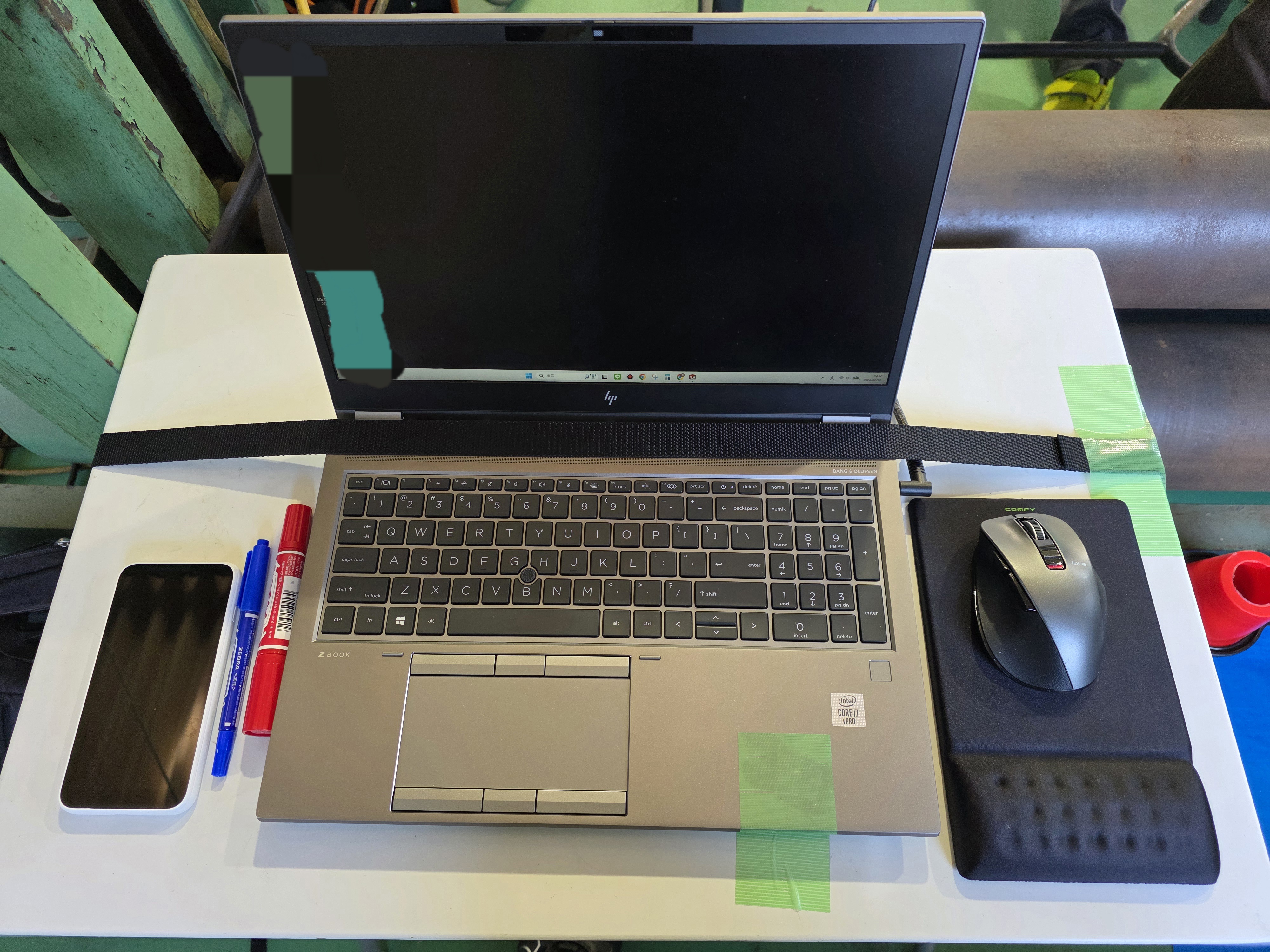
I try to create data that can be opened on a PC of this size, even if I am working on a relatively large production line. Even if the capacity is reduced because a viewer is used on site, there will be waste if the designers cannot see the details on site. I think it is very important to have a design that can be used onsite. A good design is one that takes into account as much as possible the way design data is created for realistic situations and the arrangements for actual assembly.
It is difficult to explain, but for example, each unit is assembled in a modular way, all of which are connected but not dependent on the state of the other unit. The field is really important because you can learn this kind of know-how.
I am also surprised at the site because I have this environment at home (I have my desk, PC, and chair from home), but I think that designing can be done without using a high-spec PC, and that designing in such a way that it can be done is effective in the later stages of the process. (2026-02-10)
Machine assembly: Adapting to the working posture
When assembling machines, we are reminded that there are many hidden dangers. These are injuries caused by component parts and injuries caused by poor working posture and environment.
In the working posture, work is often done on one's knees, so the presence or absence of knee protection makes a big difference in workability.
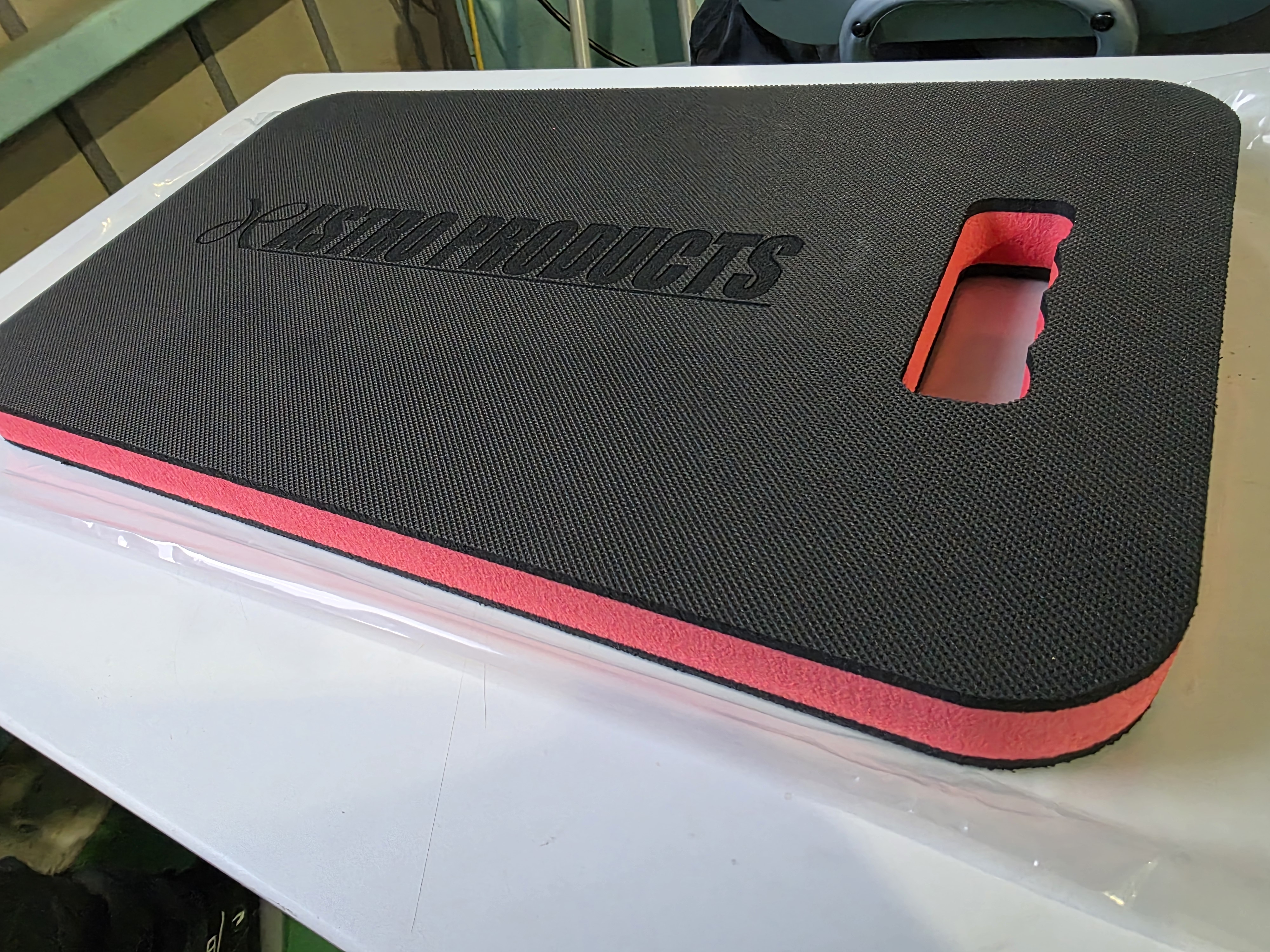
In this issue.emlogift for threemechanic mat I received a Thank you. This is very good and you should all use it. (2026-02-07)
Efficiency through semi-automatic updating
The larger the equipment in a machine design, the more designers will be involved. In order to design multiple units, the designers must be divided into units and assigned to different tasks, but there is also the theme of how to incorporate the finished units into the overall design.
I don't know about other CAD systems, but SolidWorks has a feature that "when you open a whole assembly, it is updated to the latest of the referenced data," so for a designer like me who works here and there, CAD is easy to use because it almost eliminates the need to "replace data.
When you are doing equipment things, you tend to focus on "lightness," but it is great to work efficiently using SolidWorks' functions. Of course, there are some know-how such as how to configure assemblies that are not introduced in books, but being able to do what you want is a great motivation for designing. (2026-02-04)
special wooden board for a special purpose (e.g. for shrine building, temple, grave)
Last year, in FY2025, I was also able to help with the machine assembly work, and I was able to help with the "board wood".
The equivalent of the board tree we were borrowing at the time.emlogift The product was made exclusively for us by Mr.
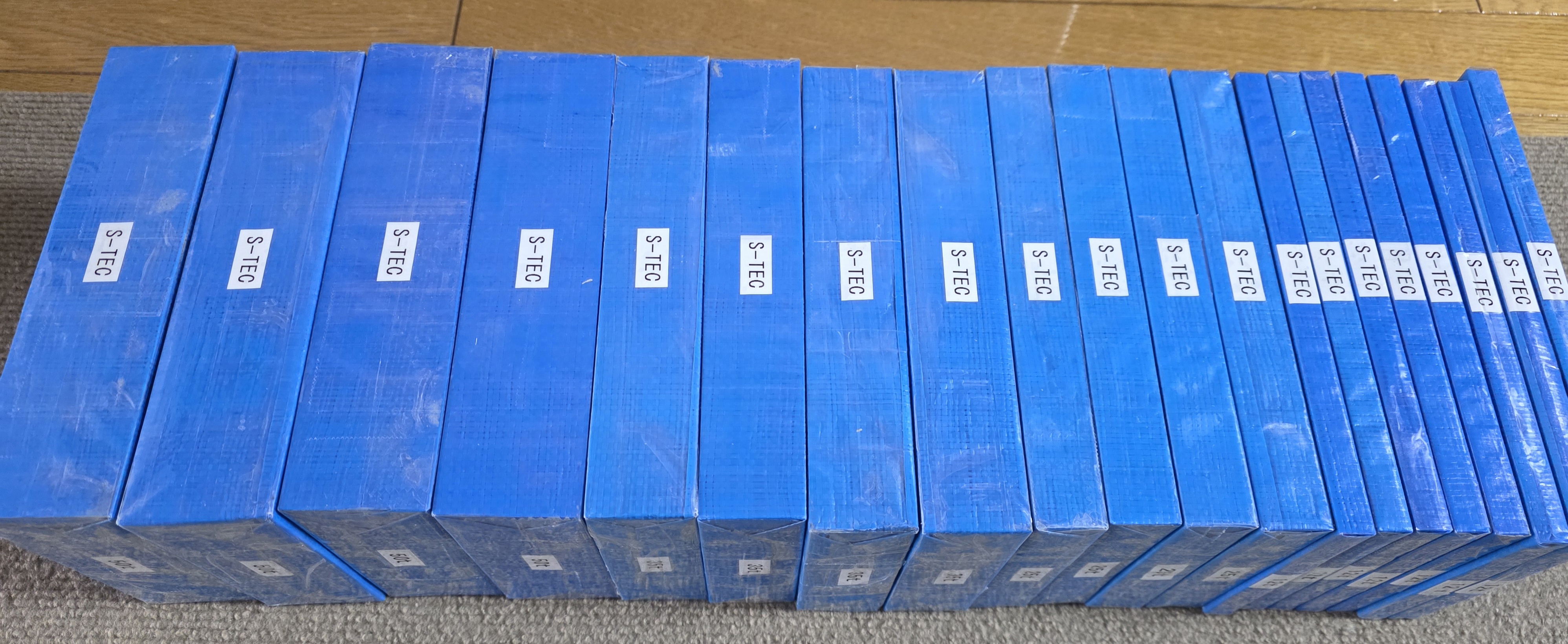
Like myself, I think there are many designers who draw the drawings but leave the actual sequence of assembly processes and safety assurance to the site.
I actually experienced several situations in that short period of time where I thought, "This is dangerous," "I can't fix it while lifting," "I can't work if I crush my fingers," and so on.
Normally, it is necessary to take this kind of thing into consideration in the design to prevent such things from happening, but we should not forget to thank the people at the site, who give shape to our "in a sense selfish design," by knowing that they use these items to safely assemble the building. (2026-01-28)
The point is to divide the designer's specialty
When a mechanical designer goes out on his own, he starts out and works alone. However, since one person does everything from 0 to 100, there can be a trough in sales between jobs.
To compensate for this, it would be good to fill in some of the gaps by having a wide range of connections, or to continue to ride the high waves of the busy season by scattering the categories of work you undertake. If we wanted to, in addition to that, have clients who would sign a fixed price contract with us, it would be a stable operation.
In my case, in addition to this, I assign work in a way that takes advantage of the design members' strengths, so we have a system in place that allows them to take on new work and unfamiliar areas.
It is really full of operational know-how now that we are here, but we can easily overcome the CAD barrier, which was clearly a barrier in the past, so we can take on even more work. This is likely to be the starting point for how the design group scales. (2026-01-24)
No meaningless links will be posted.
Many of the people who visit this memo are here to pinpoint information and relevance to others. For me, this is basically a memo for my forgetfulness, so I don't care about SEO (search engine optimization) or whatever it is commonly called. So I don't hesitate to rewrite it and delete links that are no longer needed at that time.
In such a situation, there are many people who propose reciprocal links as "effective for SEO," and we listen to their explanations, but in the end, the reciprocal links are meaningless.
By meaningless, I don't mean SEO-effective, but I don't want to put meaningless links to users who are going to read the text.
Therefore, I will make it clear that from now on I will only do reciprocal links (and not respond) to places that match the content of this blog. (2026-01-21)
I can tell you now. If you need help, please contact us.
I had low grades in junior high school, went to an agricultural high school, and then to a liberal arts school in college. I learned about design when I entered the workforce, so I honestly had no foundation at all and learned on the job anyway. Even now, my assumption that I am not good enough has not changed, and when I see highly educated engineers I meet in the field, I honestly think, "Wow!
However, as a result of my efforts to summarize what I don't understand in my spare time and to face the essentials, I feel that I now have the ability to make judgments that allow me to get the gist of things just by looking at specifications, and I am able to think in a way that takes into account the strengths and weaknesses of the manufacturers who give me work. I am also able to think in a way that takes into account the strengths and weaknesses of the manufacturers who work for me.
Even now, I am not really good at teaching others, but I am glad that I have worked so hard, because I am able to answer the questions I am asked in a certain way, and I am able to gain a certain amount of experience.
In 2026, we will do our best to contribute to the development of our current customers and to provide optimal results for new customers we meet. If you have any mechanical design problems, please contact us. (2026-01-21)
Knowing the Default Mode Network (DMN)
The default mode network is a neural network in the brain that is active in a resting state when you are not doing anything in particular, such as when you are spaced out or relaxed, but you can simply create a "do nothing time".
In mechanical design, we encounter "situations where we have to think about things that cannot be answered (or are difficult to answer)," but because the brain has DMN, those who take advantage of this are "not staying in the moment" to the point where it can be said that they are forced to do so.
I am aware of the 3B's as a way to take advantage of this, but some people set aside micro-breaks to create time to do nothing.
The 3Bs I am incorporating are not the 3Bs of marketing, but Bus,Bsthroom,Bed. Just as many people experience ideas coming to them when they are not at work, I believe that how we designers create this environment is important in creating our environment.
Our work, unfortunately, is not a world where you get results because you work hard, but rather a world where it is a matter of finding answers that capture the essence of what we do. That is why this objective approach is so important. (2026-01-20)
Separation of adjustment-less and adjustment mechanism
It is essential to distinguish between "areas guaranteed by machining accuracy (internal)" and "errors that should be absorbed in the field" for design separation.
[1] Adjustment-less (internal completion)
Adjustmentless is applied to individual devices and unit internals. Design and machining accuracy and geometric tolerances are completely constrained by knock pins, etc., to eliminate variation during assembly. The highest priority here is "the same performance no matter who assembles it.
[2] Adjustment mechanism (connection/environmental support)
The adjustment mechanism is applied to the connection between devices (workpiece delivery) and to the mounting feet. Floor irregularities, installation errors of heavy equipment, and accumulated tolerances are physically unavoidable. It is essential to intentionally provide an adjustment allowance (shims, jacks, etc.) here and "design to absorb" to achieve the final accuracy by on-site adjustment. (2026-01-16)
A system that is making things possible that would otherwise be impossible.
When I once tweeted on social media that I was going to create a freelance design group when I started my own business, I was told, "You can't do that. I'm still rooted in the idea of being told "you won't achieve it" (laughs), and indeed, I have experienced the difficulty of achieving that in many different situations.
However, it takes about 200-250h for one individual to turn it around, but now we are able to consistently turn around about 700 hours of work per month.
Not all designers have the same CAD skills, nor do they all have strengths and weaknesses.
There is no particular know-how as to how we are doing it. We are gradually taking shape simply by carefully removing each wall one by one.
Now I think I can fly all over the world to design if the opportunity arises.
We may have a serious shortage of human resources, but we will continue to meet good customers, make good machines, and have fun together. (2026-01-12)
New Options
Machines designed by others contain mechanisms, material selection, and control logic that you would never employ yourself.
For example, if I witness a situation in a certain conveying process where my only option is an "electric slider" and others are solving the problem inexpensively with a "link mechanism or chain", a new solution is entered into my internal database.
Of course, the converse of this is also true: sometimes I have an answer that is superior to the answer of another company. In addition, sometimes new ideas are born from conversations with the engineers there. In other words, the more you go into the field, the stronger you become as a designer. (2026-01-08)
Policy for Activities in FY2026
It is 2026, and I will continue to pursue the right design philosophy and work toward becoming a designer with a muddled execution.
Although the design concept may change from time to time, we will proceed with our work while clarifying the basic "design intent," "values," and "why we do what we do. Then, we would like to strengthen our ability to complete the work, clearing all the constraints on the site and bringing it to a stable "operational state" as soon as possible. (2026-01-03)