Today, we are going to discuss the "References for where to use flat washersThis is a memo about washers. I believe that each designer and each company has its own rules for where to use and where to place flat washers, but I would like to leave a memo for design beginners about where to use flat washers and the reasoning behind it.
- Where flat washers are commonly used
- Assembly and adjustment also require flat washers, and spring washers can also be effective here.
- Using a flat washer reduces surface pressure.
- If you want to fasten with a kiriana hole that is larger than a slotted hole, but not a full slotted hole
- Where a flat washer is not needed
- Why is a washer used on a flat surface but not when a countersunk hole is used?
Where flat washers are commonly used
Yes, there are elongated holes where flat washers are used. Flat washers are essential for elongated holes.The reason a flat washer is needed in an elongated hole is that the area where the bolt can exert pressure is different in a normal hole versus an elongated hole.
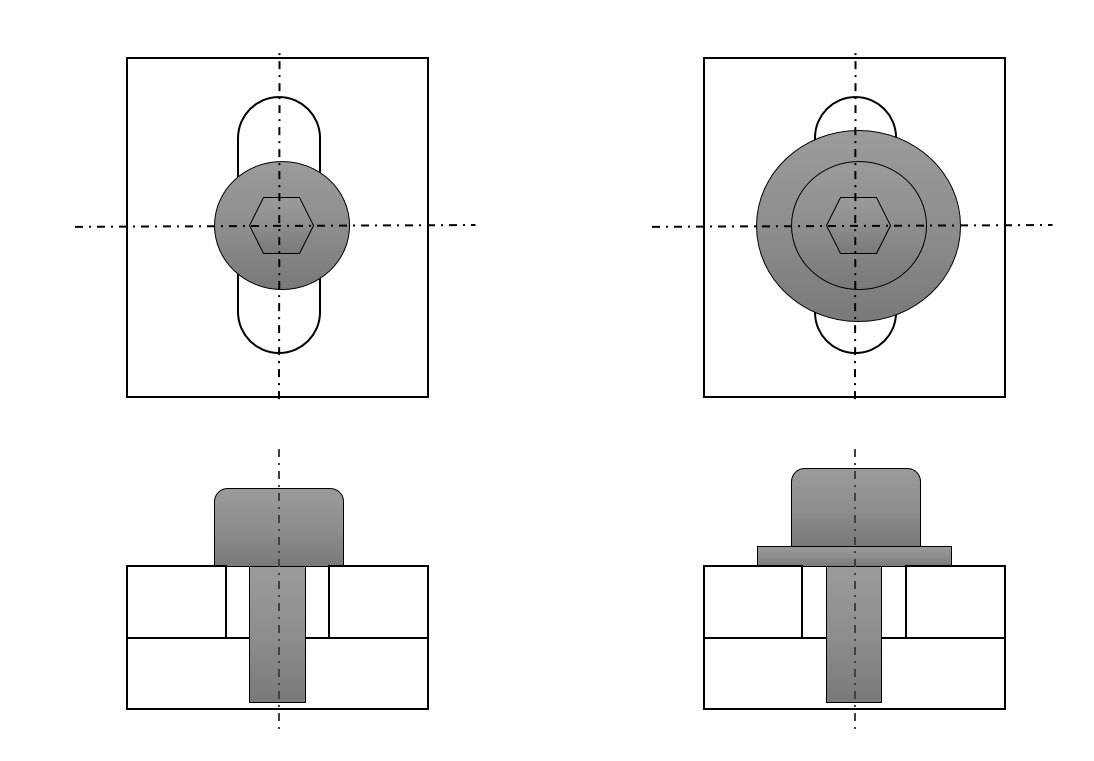
As for what happens with that difference in area,When a plate with elongated holes is consequently indented due to bolt axial force, or the plate itself shifts and cannot be firmly fixed at the center of the elongated hole, uneven load is applied to the bolt, which is not good.
Assembly and adjustment also require flat washers, and spring washers can also be effective here.
A typical application of slotted holes is in the adjustment part of an assembly.
The location for assembly adjustment depends on the adjustment method, but by using a spring washer in addition to a flat washer here,It has the advantage of making assembly and adjustment easier because it can be adjusted with light force.There is talk that spring washers are unnecessary, and it's true that their spring effect is reduced when fully tightened, so they are indeed unnecessary in that case. However, they can be well utilized if the goal is to make adjustment easier.
Using a flat washer reduces surface pressure.
As I mentioned earlier,The axial force of a screw becomes a pressing force. For example, when fastening resin,There's also a technique of using a flat washer to reduce surface pressure when high stress on the base material causes it to indent.
If you want to fasten with a kiriana hole that is larger than a slotted hole, but not a full slotted hole
When fastening large plates, such as machine bases, it is sometimes necessary to slightly enlarge the pilot holes to allow for minor adjustments. In such cases, for large items with oversized pilot holes, it is recommended to use a thick metal washer instead of a flat washer.
When the hole is large, the bearing surface of the washer becomes smaller, and the stress between the bolt's center and the washer's outer circumference becomes larger, causing the flat washer to bend.
Where a flat washer is not needed
The places where a washer is not needed are all the places where it is meaningless to use one.For example, where a part that has been quenched is being held down.
Why is a washer used on a flat surface but not when a countersunk hole is used?
Generally, flat washers are not used for countersinking. It is presumed that countersinking cases fundamentally do not require adjustment.
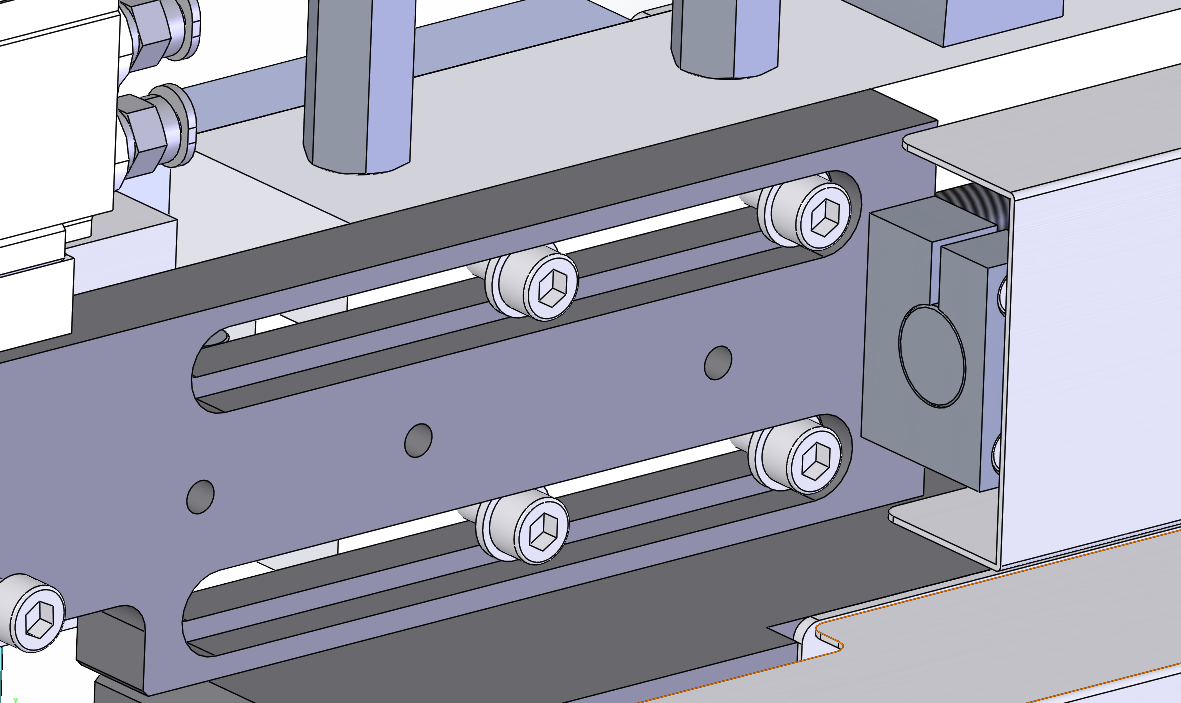
However, for adjustment, sometimes elongated holes with deep countersinks are used, and in such cases, flat washers are necessary.
That's it.
-

-
Screws, taps, washers, inserts
Other reference For reference of bolt position. Bolt position with washers in mind.
See more.