Today, we are going to discuss the "Machined parts after welding, flat machining near a wall is basically no good unless it is away from the wall.This is a note called "The following is a memo. I am not sure if this title is appropriate and will come across well, but I would like to share it because I received an inquiry from a fabricator and thought it was quite important for designers.
Flattening of tap seat close to the wall
Please check this section first.
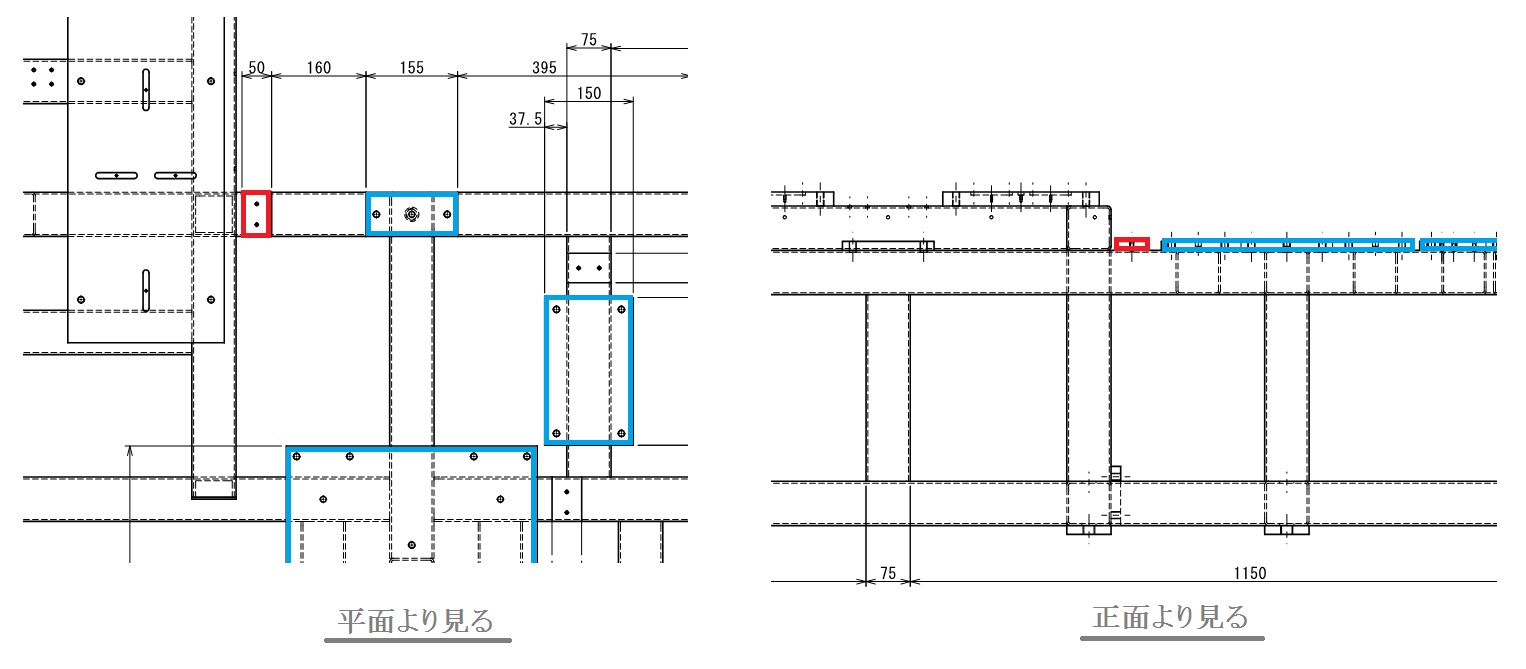
This is the structure as you see it,This wall edge "is severely flattened at the corner (wall side) of the red enclosure surface."This was the case.
Inquiry received: "Is it OK to use 6F lumber because tools won't fit?"
The reason for this is "Is it OK to weld with 6F welding because the tool does not fit and this will cause height variation?It was.
I had thought that the part could be machined without any problem, but I decided to accept the suggestion for this part. I did so because it was easier to see the part drawing if the height was aligned with the plane of the adjacent board, not because I was originally concerned about the height of the part.
After a little digging, I surmised that this is probably what happened.
When we received the inquiry, we did not have enough time to listen to the conversation, but later, when we had more time, we were researching tools for plane milling and found this tool with a general tool shape.
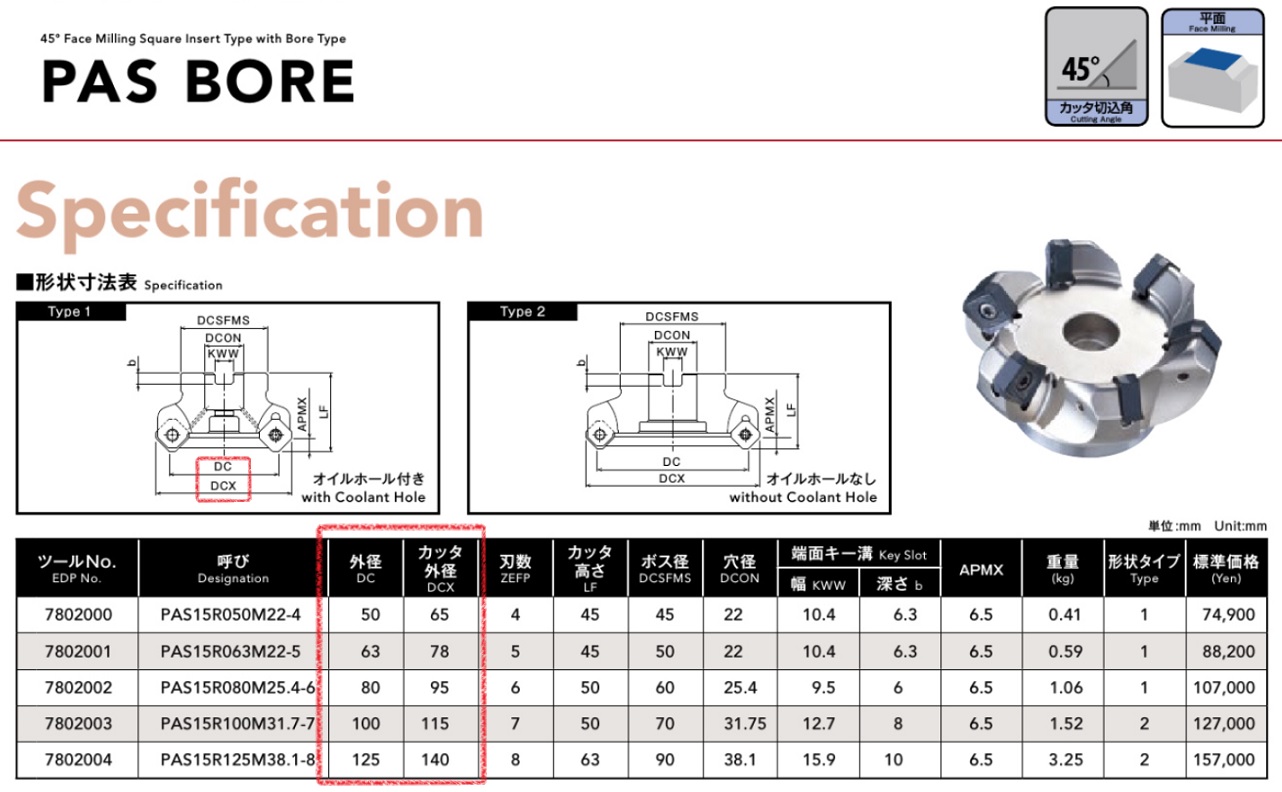
"Oh... I see... that's what you mean..." I was convinced when I saw the shape of the tool.
Of course, depending on the tool, I think it is possible to plane cut well to the corners,Since this part had other flat machining areas (blue surround) and a flat surface with a large area, we wanted to use a tool with as large a machining area as possible, and in that case, the difference between the tool outer diameter and the cutter outer diameter would be larger, so the suggestion was that tool changes would occur, which would not be efficient. (speculation) ...I did.
This is the place.Comprehensive judgment by the machinist on the shape of the part, the machining center, other cutting parts, and all other items.I think it is. There are several shapes of tools for plane milling, and I think that in the case of an all-cut product, it would be finished with something that is not a tool like this one, so I don't think that the proposal like this one would have been the opposite. It was a great learning experience.
Finally.
Like this time,Tap seat plane machining in areas with walls that are not walled off by cutting (e.g., due to can manufacturing) requires some distance between the wall and the tap seat plane.I once again understood that
However, since the tap seat comes where it is needed,I had no problem with the 6F this time, but there will be times when I'll need to ask for a tool change.That is what I mean.It is difficult for us designers to know everything about machining (including what kind of machines and tools are used), but we would like to deepen our understanding little by little.
That's it.