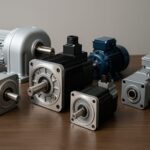
Here, in calculating the required output of the motorInertia (moment of inertia) required at the same level as theInertia Ratio (Load Moment of Inertia Ratio) I am making a note about the following.
The inertia ratio is a major factor in motor size selection,If the inertia ratio is not checked and a motor is selected based on the required torque alone, motor control may be affected.
This article summarizes how to calculate and check the inertia ratio, and notes how to avoid mistakes in motor size selection. It is not difficult to understand the inertia ratio, and we hope you will make use of it in selecting an appropriate motor.
Inertia Ratio of Motors
Inertia ratio is a value to determine the appropriate size of motor
Inertia ratio is an important concept in motor selection And this isRatio of the load inertia (inertia) driven by the motor to the inertia of the motor itself refers to
Specifically, it is the value obtained by dividing the load moment of inertia by the motor moment of inertia.
This article uses the term "inertia ratio," but Yaskawa Electric calls it "allowable moment of inertia ratio" and Mitsubishi Electric calls it "load moment of inertia ratio.Inertia ratio is a reference value that determines the proper size for a motor to efficiently move and control its load and the inertia ratio that can be handled by each motor used will vary.
If the inertia ratio is too high (load inertia is too large), the motor will not be able to control the load efficiently, and if it is too low, the motor will be oversized as a ratio, resulting in control costs and other effects.
Citation:https://fa-faq.mitsubishielectric.co.jp/faq/show/10276(Mitsubishi Electric Corporation)
Q: What problems will occur if the recommended load moment of inertia ratio is exceeded?
A: Answer
- Exceeding the recommended load moment of inertia ratio may make it difficult to increase gain and may result in poor performance.
- Since a large acceleration/deceleration torque is required according to the load inertia moment ratio, the acceleration/deceleration time may have to be extended.
- Exceeding the allowable load moment of inertia ratio may cause the servo amplifier or servo motor to fail.
Thus, when designing a machine that handles motors, it is necessary to check not only the load torque but also the load inertia to confirm that the inertia ratio is appropriate when selecting a motor.*If the recommended inertia ratio is exceeded, check with the specification manufacturer, who may be able to provide a solution.
Inertia ratio (allowable moment of inertia ratio) calculation formula
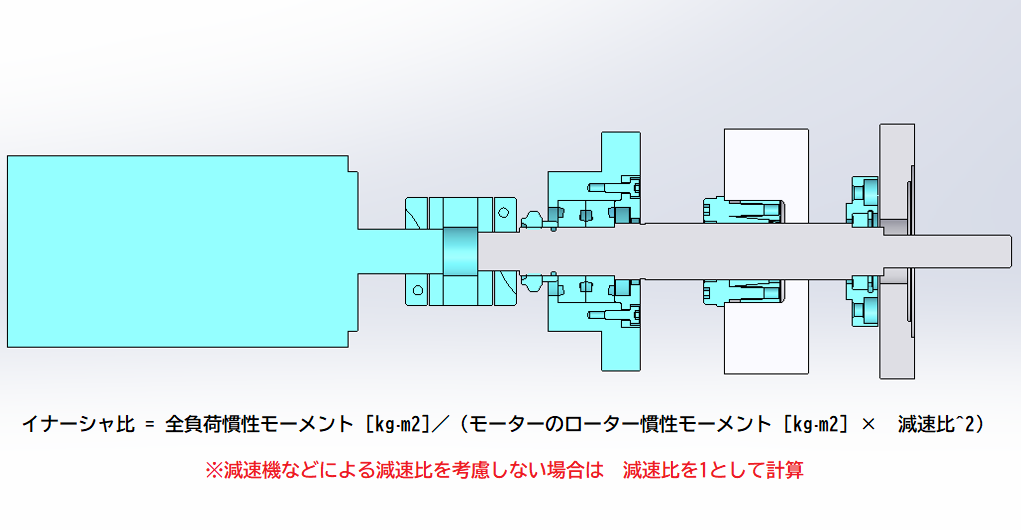
The calculation of the inertia ratio is as follows
Inertia ratio = Full load moment of inertia [kg⋅m2 ] / (Motor rotor moment of inertia [kg⋅m2 ] × reduction ratio^2)
At this time,If the reduction ratio due to reduction gears, etc. is not taken into account, the reduction ratio is calculated as 1. I will do so.
In addition, the full load moment of inertia isAll the items to be driven by the motor (1) Mechanism (2) WorkpieceThe first two are the following.If you would like to see this calculation in more detail, please refer to Oriental Motor's Inertia Ratio Calculation page.
How to know the approximate inertia ratio and its limits
This inertia ratio isEach manufacturer may have a different approach and emphasis, and different types of motors have different recommended inertia ratios. Therefore, it is generally necessary to check with the catalog of the manufacturer used.
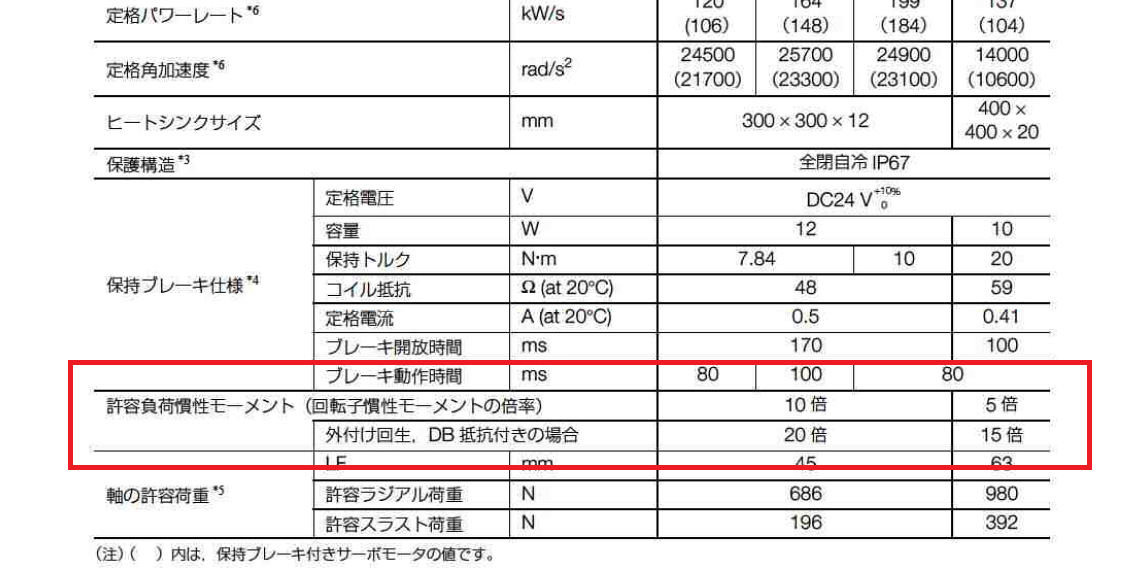
Image: Borrowed from Yaskawa Electric Corporation catalog.
Finally.
Finally, in this mechanical design memo, we willDistribution of sheets for recording inertia ratios for reference. The company is doing so.It is very important to show and keep records and evidence in mechanical design, so please use them if you like.Also, please check out our blog page where we have compiled notes on the practical use of motors, such as motor capacity calculation from rotational torque.
That's it.
-

-
What is Inertia? Useful calculations for machine design and how to determine the correct driving force
This section describes how to calculate inertia (moment of inertia), an unavoidable factor in machine design, and notes how to determine the correct driving force. In the design of automatic machines, it is important to know ...
See more.
-
-
A Complete Guide to Motor Selection and Types [For Mechanical Designers].
This section provides notes on the types of motors that many people may have trouble selecting when designing a machine. In machine design, motor selection is an important factor that determines the performance of ...
See more.